The Limitations of Recycling
Globally, only around 9% of the plastic produced to date has been recycled (source: EEA). The rest is incinerated, sent to landfill, exported, or ends up in the environment. Even the recycled portion is rarely transformed back into the same product. Most materials lose quality and can only undergo a limited number of cycles. Therefore, even with recycling, we remain trapped in a system that continuously requires new raw materials.
From a consumer perspective, recycling seems like a clean and easy solution. In reality, however, it is an industrial process that requires a significant amount of energy, water, machinery, and transportation. Plastic must be sorted, washed, heated, and reshaped, which in any case involves emissions.

Recycling has also become a psychological comfort zone. It reassures us that we’re doing something good, even if our overall consumption keeps rising. However recycling doesn’t stop waste from happening, it only manages it after it already exists.
Circularity Begins Long Before Recycling
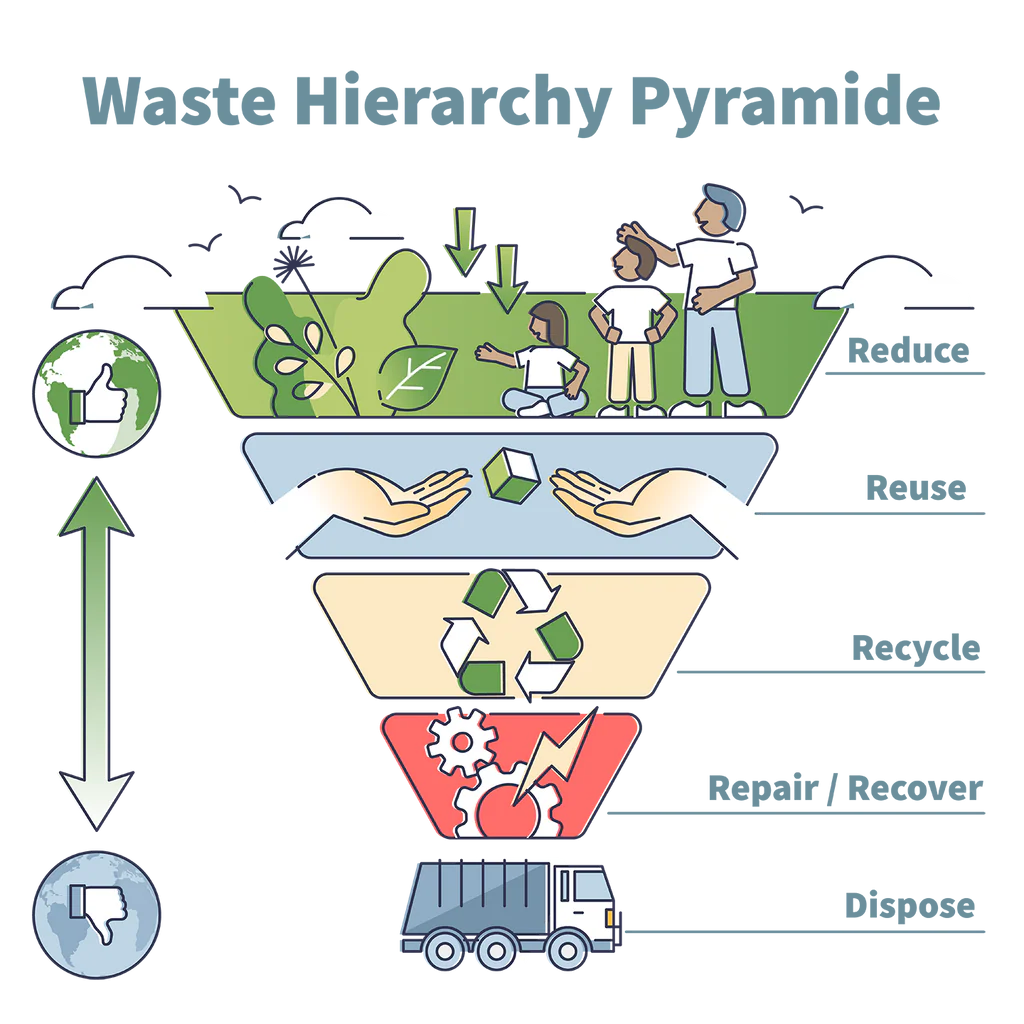
The circular economy’s hierarchy tells a different story. At the top are the strategies with the highest positive impact: refuse, reduce, and reuse. The reason is simple. Recycling still follows a linear pattern of take → make → waste, with a small detour at the end. True circularity means rethinking products and systems so waste doesn’t appear in the first place.
Reusable vs. Recyclable Packaging
Let’s take the example of packaging. Recyclable packaging is still single-use. Even if materials can be recycled, every cycle demands energy, water, and transport.
Reusable packaging breaks that pattern. The same packaging can be used again and again, dramatically reducing material consumption, waste generation and CO₂ emissions. Instead of mitigating waste, you’re preventing it from being created. This is the foundation Movopack is built on providing reusable packaging solutions that stays in circulation, not in landfills.

Conclusion
Recycling will always have a place, but it can’t solve the waste crisis on its own. As long as products and packaging are designed to be used once, no recycling system can catch up with the volume we produce.
Meaningful progress happens higher up the hierarchy, where we prioritize reducing and reusing long before we think about recycling.
Are you ready to discover circular packaging solutions for your brand?